Your Account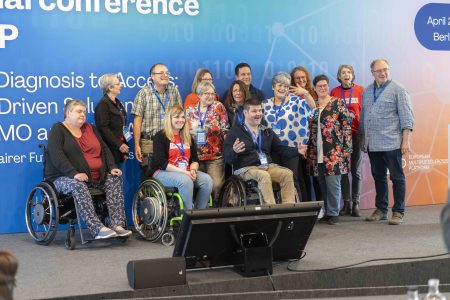
Day 2 in Berlin: Stories That Moved Us, Science That Moved Forward
25.04.2026If Day 1 set the stage, Day 2 turned up the volume. We went biology-deep, got personal about life stages too often left out of the conversation, and were reminded again that science only matters when it reaches the people it’s for.
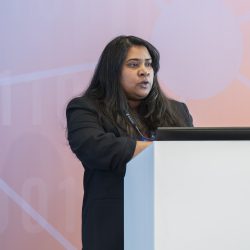
Just Do It! by Mirjam Kottmann
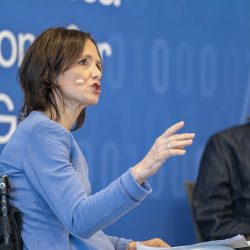
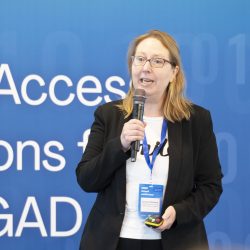
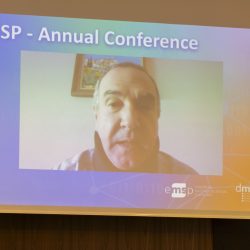
Few keynotes land like Mirjam Kottomann’s. Diagnosed with MS at 21, she became Germany’s first national TV moderator using a wheelchair, and in 2024 was named Journalist of the Year. She walked us through hiding her cane at work, advocating at the EMA in London, and the turning point when she stopped hiding her disability on screen — and the messages from viewers started pouring in. In Europe nearly 20% of people live with a disability. As Mirjam reminded us, that’s not a marginal group. And it deserves visibility, not workarounds.
Not Just a Label: A Biology-Driven Approach That Fits You
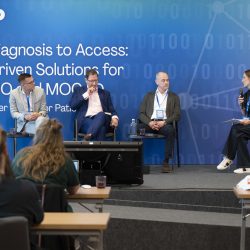
The PIRA panel pushed past the old categories and into how MS actually behaves. Even when the disease “looks stable,” patients often feel worse and PIRA is finally giving that lived experience a name and a measurement. Biomarkers like NfL are starting to show us the part of the MS iceberg that sits below the waterline, and BTK inhibitors are emerging as a hopeful next chapter. The takeaway: “stable” deserves a rethink, smouldering inflammation is real, and personalised care isn’t a buzzword, it’s the destination.
Models of Care: Specialised Centres vs. Outpatient Pathways
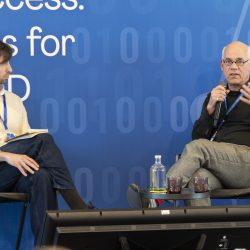
Wolfgang Koehler (Leipzig University), Anna Arellanesova (rare diseases advocate, Czech Republic), and Jana Hlavacova (EMSP Policy Consultant) explored the question every health system is wrestling with: who treats the patient? With 250,000 people living with MS in Germany alone, no system can route everyone to a specialist — but every patient deserves at least one specialist consultation. The panel made a strong case for MS nurses as the multiplier the field has been missing, and for cross-border collaboration via European Reference Networks (ERNs) to support rare disease care. Telemedicine and AI got a nod too, especially for patients with limited mobility.
Hot Topic 1: CAR-T Cell Therapy by Dr. Barbara Willekens
CAR-T is the conversation that keeps getting louder- Engineered immune cells, designed to find and clear the B cells driving inflammation. The early results from lupus opened the door, and MS trials are now underway across Europe, China, North America, and Australia. Most studies are still in Phase 1 or early Phase 2, and big questions remain: how do we define remission, who benefits most, and what does long-term safety look like? Cautious optimism was the prevailing mood. Watch this space. View Dr. Barbara’s presenation on CAR-T Cell Therapy here.
Hot Topic 2: Stem Cell Therapy
MS Researcher and EMSP Young People’s Network’s member, Felipe Balistieri Santinelli explored Stem Cell Therapy with Dr. Christoph Heesen (Institute of Neuroimmunology and Clinical MS-Research, UMC Hamburg).
Stem cell therapy isn’t a repair job. It’s an immune system reboot! Once reserved as a last resort for the most aggressive MS, it’s increasingly seen as a treatment of choice for highly inflammatory disease that hasn’t responded to anything else. Interest is now growing for progressive MS too, though the data isn’t fully there yet. The honest message: real promise, real questions, more trials coming.
View the related research papers referred by Dr. Heesen on the topic here and here.
Hot Topic 3: Menopause and MS by Ruth Dobson
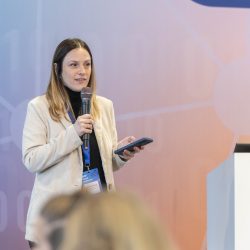
A session the MS community has been waiting for! Ruth Dobson brought research from over 3,000 people with MS and confirmed what many already knew: menopause and MS overlap in messy, exhausting ways- fatigue, sleep, bladder issues, spasticity, mood. Two-thirds of MS women going through menopausal transition reported sleep problems. The good news? Menopausal symptoms are often more treatable than MS symptoms and HRT is a real opportunity for personalised care. Long-term MS outcomes don’t appear to be worse, but quality of life absolutely is. The call to action: stop separating these conversations. Treat the whole person. View Dr. Dobson’s presentation on link between MS and Menopause here.
Shaping the Future: From Evidence to Action
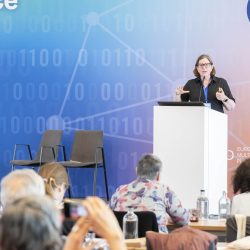
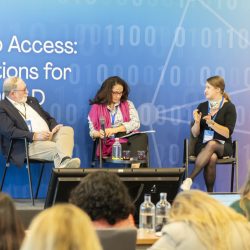
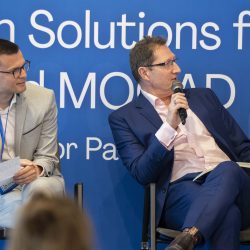
The closing panel comprising EMSP President, Jan Van Amstel (EMSP President), Kinga Wojtowicz (RPP Group), Michaela Mai (DMSG), Finn Sellebjerg (Danish Multiple Sclerosis Center) and Jana Hlavacova (EMSP Policy Consultant) zoomed out to the European picture and didn’t sugar-coat it. Access gaps remain, financial barriers still block care, and basics like bladder and bowel management in MS are still falling through the cracks. But there are real levers in motion: the European Health Data Space is now law, opening the door to better cross-border data use; the upcoming Biotech Act could help reverse Europe’s slipping share of clinical trials; and a new report on neurological health is on the way. The Danish-Swedish registry collaboration got a well-earned shout-out as a model worth copying. The challenge across all of it? Interoperability, and showing up where decisions are made. Patient voices need to be louder, more visible, and impossible to leave off the agenda.
That’s a Wrap on EMSP 2026
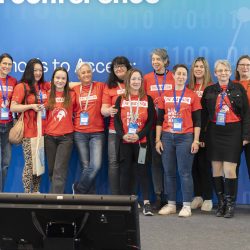
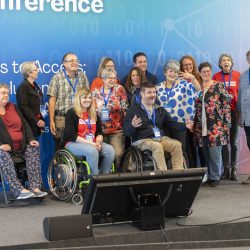
To every speaker, panellist, patient advocate and attendee — thank you. You showed up with energy, asked the hard questions, stayed for the breakouts, and turned two days in Berlin into something that genuinely felt like progress.
Help us make next year even better: the conference survey will land in your inbox shortly. It takes a few minutes and shapes everything we do next.
Missed a session or want to share one? Watch the Annual Conference Playlist on our YouTube channel . Check out the Day 1 highlights here.
See you next year in Portugal! #EMSP2027