Your Account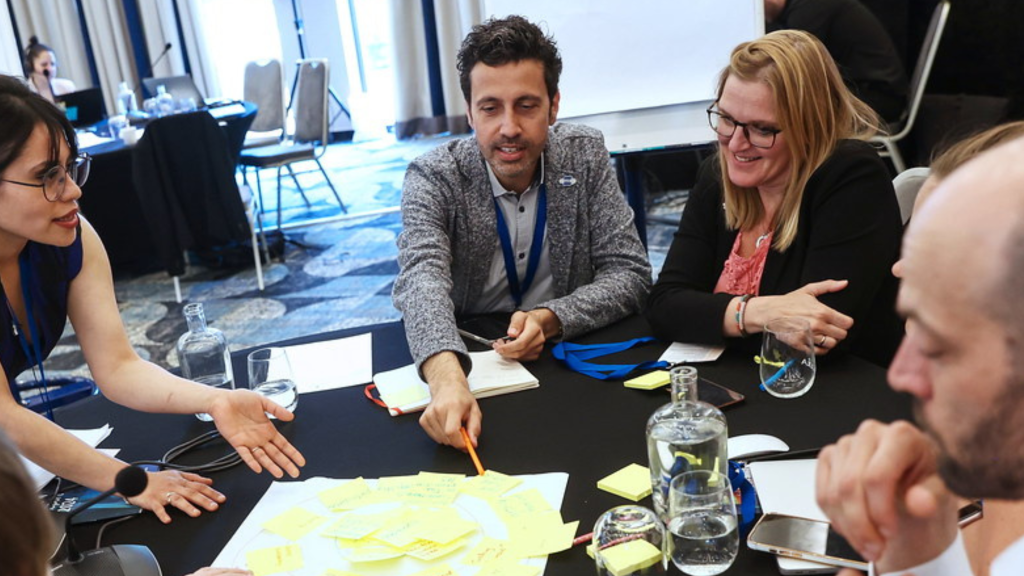
MCB: Online Community Building
17.12.2025The Workshop on Online Community Building, part of EMSP’s Membership Capacity Building (MCB) Programme, was held in 2020 during the pandemic. It brought together representatives from various EMSP member organisations to share experiences and best practices. In this article, you can explore the main outcomes of the workshop and access the presentation slides for further learning.
Objectives of the Workshop
- Create purpose statements to ground online community-building work.
- Share among all attendees what has worked and what has not to build online communities post-COVID-19 in Europe.
- Introduce attendees to technology/tools for building an online community.
Creating Meaningful Online Communities Post-Pandemic
Many people mistakenly assume that online community building is all about technology. While technology is a consideration, the purpose of the community and the relationships between those in the community must come before technology selection. This workshop aimed to sharpen members’ community purpose statements before introducing participants to dozens of new online community building tools.
Purpose Statements Require:
- WHO: A clear, specific, unique type of member (e.g. not all doctors, innovative and reform-minded doctors; not all mothers, mothers caring for children recently diagnosed with MS;
- WHAT: What are 3 ways your members want to make progress together? Write these statements as short phrases
- WHY: Your reason for existing, a lofty, idealized statement that speaks to your organization’s vision for a brighter future.
1) Purpose statement creation
Meaningful online community engagement:
- Creates connection between members
- Creates connection from members to a larger purpose
- Grows a long-lasting mission (not just likes, shares, and comments on social media or views, registrations, or clicks on webpages)
Recommendations: Member organisations need to dig deeper into their “why”. Serving people with MS is an important cause, but there is a deeper, richer purpose behind the desire to serve. This is an area ripe for improvement for each member organization.
A member pointed out how difficult it is to write these statements so that they resonate with the organization AND its members. If your “so that” feels transactional and cold, dig deeper. Ask: “Why does that matter?” until you hit a root value, belief, or dream for the future. This should sound noble, grand, and idealistic; we join and contribute to communities that are noble, grand, and idealistic.
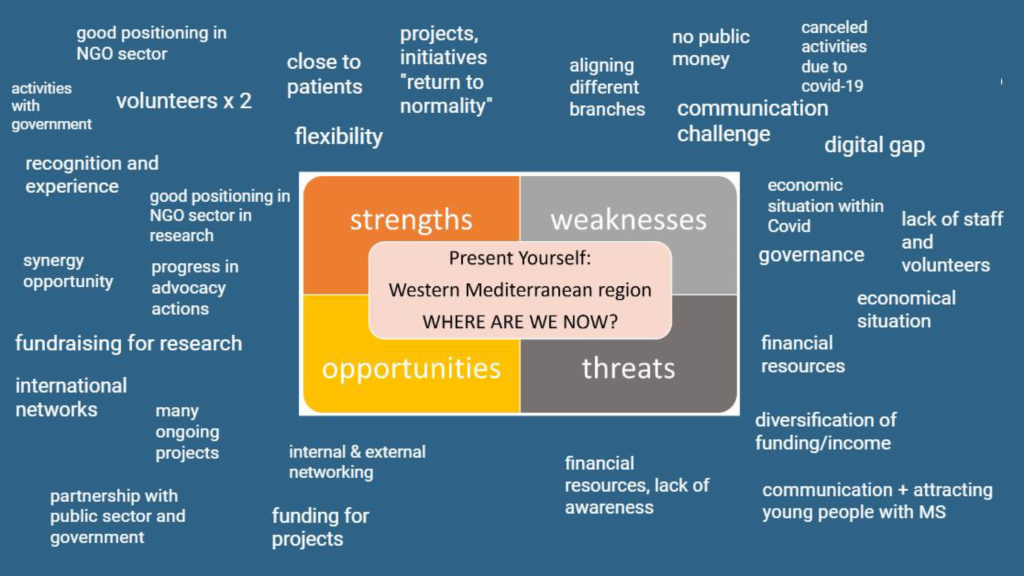
2) Peer sharing of online community activities & experiences since March 2020
We shifted our focus from ideals into actions. Gathering in groups, we documented the online community experiments and activities organizations have tried since March 2020.
What has been successful:
- Regular meeting with volunteers (first Saturday of each month)
- Web conferences (different theme each time)
- Workshops (we developed workshops with volunteers, and it was a success not to make them travel, we discovered that they usually don’t participate due to fatigue)
- Webinar with Member societies followed-up with bilateral calls and national multi-stakeholder calls
- Series of webinars on relevant topics for dermatologists
- Series of expert meetings of MS neurologists (online)
- Webinars on mental health, nutrition in MS, quality of sleep
- Facebook live session with a neurologist
- A briefing of the Society, our services, etc.
- Exercise program for people with MS in a closed Facebook group, on YouTube channels
- Facebook posts commenting and discussing various subjects, ZOOM, Skype
- Zoom – weekly webinars -250+ attendees
- Raised money during pandemic via a local
fundraising website - Women with MS webinar was well-attended and successful
- Counseling via online tools like Zoom
- Virtual MS Advisor: experts in nutrition, physical therapy, etc. answer member questions input via Google Forms
What has not worked and what we can learn from:
- Space to ask a question for a two-hour duration on Facebook, only 2 people came each time
- General meeting by Zoom (I found it lacking warmth and exchange, very dull conference)
- Diaspora (western Europe) tried to organize support group but fear and isolation made this too difficult
- Slack + so far have not seen any great examples of a lively online platform used for one community
- Our general meeting was unsuccessful in the sense that we were disappointed with the number of attendees.
Recommendations: Use the simplest tools possible, deferring to where people are already comfortable (Facebook Groups, Zoom, email listservs for small groups). For live meetings, do not discount the power of warmth and member-to-member interaction. Continue regular live experiences with key people like volunteers.
3) Tools & Technology
Finally, attendees received a platform landscape document (see long list here or attached resources) and top 10 recommendations.
Tools that have been successful so far include:
- Facebook (for some, unreliable for others)
- Whatsapp (for some, also unreliable for others)
- Viber
- Zoom
- Websites with email functionality and member only area
- GoToMeeting & GoToWebinar
- Mailchimp
- Bespoke platform for elearning courses and community functionality
- Google Forms
- YouTube
- SMS
- MS Teams
Recommendations: Always consider the habits that your members already have when it comes to technology (if any). For some, technology is completely new and uncomfortable. Where possible, defer to mail and in-person. For those who use Viber, Facebook, Twitter, etc. defer to where members are already spending time so you may serve them conveniently.
Community Platforms to Consider
- Circle
- Forem
- PlatformOS
- Reciprocity.community
- Vanilla
- Disciple
- Mobilize
- Salesforce Community Cloud